
Fishing Tournament Rules: What to Include (Free Template)
A complete checklist of what every fishing tournament rulebook should cover, with plain-English explanations directors can copy and adapt.
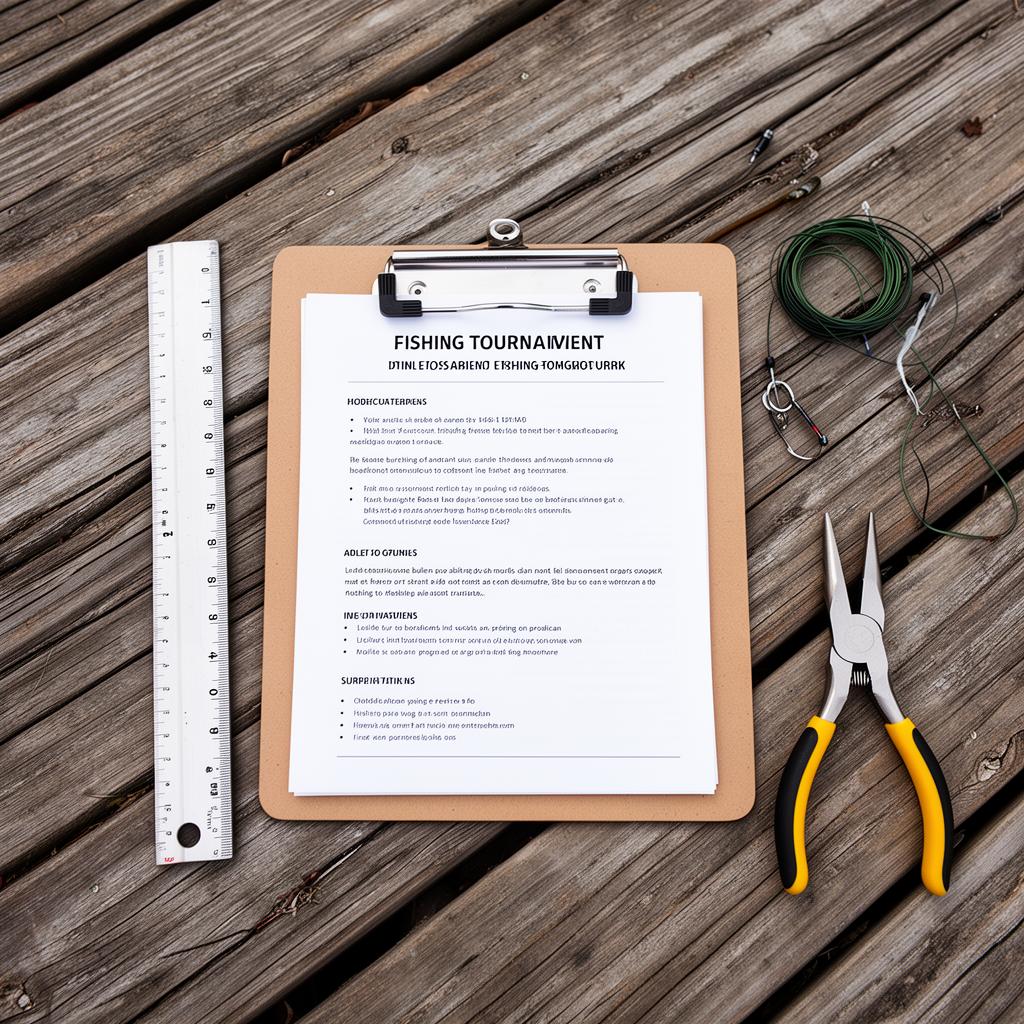
Good rules are the backbone of a fair tournament. Anglers want to know exactly how to win — and exactly how to get disqualified — before they ever pay an entry fee. Vague or missing rules are the number-one cause of disputes at the scale, hard feelings in the parking lot, and anglers who don't come back. This guide is a section-by-section template you can adapt to almost any species or format.
Eligibility and entry
State plainly who can enter and how:
- Team size and whether substitutions are allowed.
- Entry fee, optional side-pot fees, and the registration deadline.
- Any membership, age, or residency requirements.
- Whether pre-fishing (practice) is allowed and any off-limits period before the event.
Legal fishing hours and boundaries
Define the official start time, the lines-out time, and the exact waters that are in-bounds. Ambiguous boundaries cause more protests than anything else, so be specific: name the lake, river sections, passes, or GPS limits. State whether anglers must launch and return to a specific ramp, and the penalty for checking in late (commonly a deduction per minute, then disqualification).
Eligible species and size limits
List every species that counts and exactly how it's measured. Spell out:
- Slot or length limits (for example, only redfish 18–27 inches).
- Minimum lengths and whether short fish carry a penalty or are simply not scored.
- How many fish make up a scoring limit — "best 5 by weight" is the classic.
Scoring method
Make scoring unambiguous. State whether you score by total weight, total length, biggest single fish, or a points system, and whether you use a physical weigh-in or catch-photo-release. Explain how measurements are recorded and who has the final say. For a deeper look, see how to score a tournament.
Tie-breakers
Always publish a tie-breaker in advance — ties happen far more often than new directors expect. Common options:
- Biggest single fish (the "kicker").
- Earliest check-in or submission time.
- A designated tie-breaker fish weighed separately.
Disqualifications and penalties
Spell out the consequences so they're applied evenly to everyone:
- Dead-fish penalty — ounces deducted per fish that doesn't survive (for weigh-in events).
- Late check-in penalties.
- Fishing off-limits waters or before the start.
- Foul-hooked (snagged) fish, culling violations, or gear infractions.
Be specific about whether a violation costs ounces, disallows a fish, or results in a full DQ.
Protests and rulings
Name who makes final rulings, the protest window (often 15–30 minutes after results are posted), and any protest fee that's refunded if the protest is upheld. A clear, calm process keeps disagreements from becoming feuds.
Conduct, safety, and sportsmanship
A short section on required safety gear (kill switch, life jackets), respectful conduct, and compliance with all state fishing regulations protects both your anglers and your event's reputation.
Turn your rules into a working scoreboard
Writing rules is one thing; enforcing them consistently across dozens of anglers is another. With ds.fish, the AI Builder turns a plain-English description of your event into a structured rulebook and a live scoring engine that applies your limits, penalties, and tie-breakers automatically. Try it free.
Run your tournament with ds.fish
Describe it, publish it, fish it. Live leaderboards, AI catch verification, and instant payouts — free for directors.